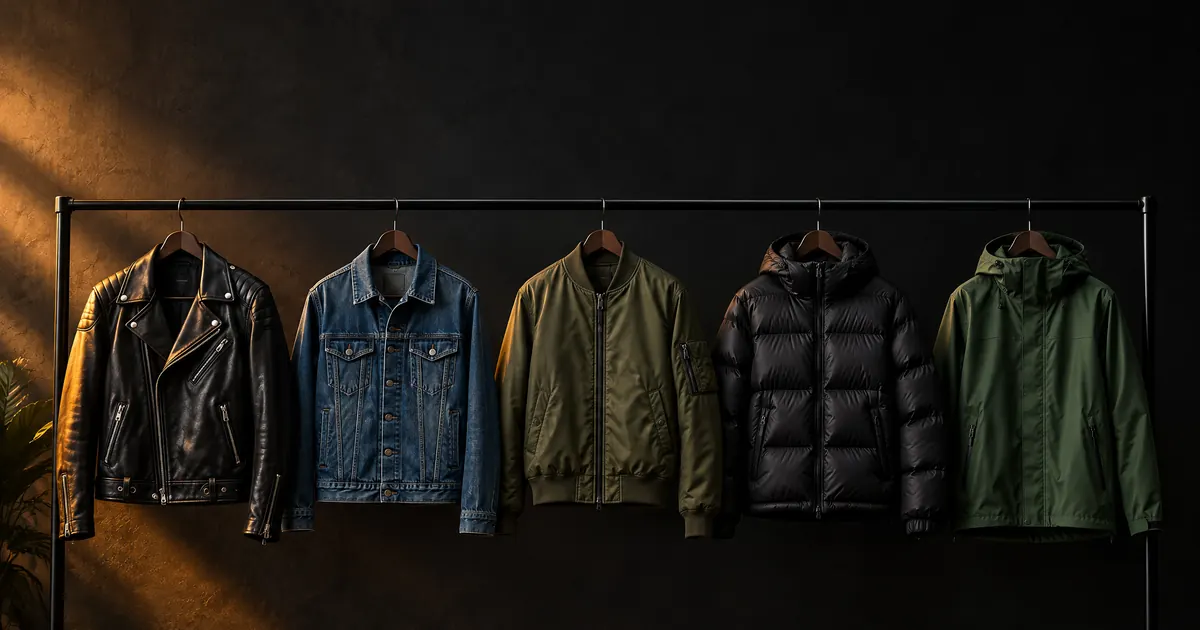
Most people own jackets they never wear. Not because the jacket failed, but because the jacket was never right for their life in the first place - too dressy for the school run, too heavy for the climate, too fragile for the job. Choosing well is less about fashion and more about honest matching: what you do, where you live, and what you already own.
This guide gives you a four-question framework. Answer them in order and the right category of jacket usually picks itself.
Question 1: What is the weather actually doing?
Start with climate, not style. A jacket that cannot handle your weather will stay in the closet no matter how good it looks.
- Cold and dry: Insulation is what matters. A puffer or quilted jacket traps warm air in baffles and packs serious warmth per gram. Quilted styles lie flatter under layers; puffers are warmer but bulkier.
- Cold and wet: You need a shell first. Rain jackets and hooded windbreakers with a sealed or coated face keep water out, and you add warmth underneath with midlayers.
- Mild and changeable: This is the largest category for most buyers. A bomber, denim jacket, or light quilted layer covers everything from 45°F mornings to 70°F afternoons.
- Wind more than rain: A windbreaker blocks convective heat loss - the chill you feel standing in a breeze - and weighs almost nothing.
Question 2: What will you actually do in it?
Be honest about your real week, not your ideal one. A jacket for a commute and a jacket for a worksite are different tools.
Commuting and city wear
You need something that looks intentional over office clothes and survives being taken on and off. Faux leather and clean-faced bombers do this well. Our faux leather jackets are built for exactly this role - structured enough to read as "real" outerwear, easy enough to live in daily.
Active and outdoor use
Movement changes everything. Look for a slight drop tail, articulated or raglan sleeves, and a shell that blocks wind. Packability matters if the jacket rides in a bag: see our guide to what makes a packable jacket worth buying.
Work and utility
Priority one is fabric durability and priority two is washability. Denim and heavier cotton shells take abuse and look better for it. The sherpa-lined denim styles are the classic choice for exactly this reason.
Question 3: How should it fit?
Fit is where most returns happen, and almost all of them are avoidable. Three rules cover 90% of cases:
- You should be able to layer under it. Zip or button the jacket fully over a hoodie or midweight sweater. If you cannot, size up - especially in tailored cuts like cafe racers.
- The shoulder seam should sit on your shoulder. Not down the arm (too big), not up on the collarbone (too small). The exception is intentionally oversized cuts, which are labeled as such - like our oversized denim.
- Sleeve length is checked with arms relaxed. The cuff should meet your wrist bone. Every Orvanee product page lists measured chest, length, and sleeve dimensions per size, so you can compare against a jacket that already fits you.
And because fit is personal, every order is covered by our 30-day fit guarantee: if the size is wrong, the exchange is free.
Question 4: What is it made of - and does the price make sense?
Materials determine how a jacket ages. Learn three families and you can read any product listing:
- Cotton and denim: Breathable, durable, fades with character. Machine washable. The workhorse family.
- Faux leather (polyurethane): Wipes clean, holds structure, no break-in period, no animal products. Needs gentler care than fabric - never machine wash or iron it. We compare it directly with real leather in this guide.
- Technical synthetics (nylon/polyester): Lightweight, wind and water resistant, fast drying. The family behind windbreakers, rain shells, and packable puffers.
On price: a fair deal is a jacket whose material, construction, and care requirements you understand before you buy. A $60 jacket you wear 100 times beats a $300 jacket you wear twice. That math - cost per wear - is the entire philosophy behind Orvanee's lineup: honest materials, plainly labeled, at prices that let you actually wear the thing.
A quick decision shortcut
- Need one jacket for everything? Get a midweight bomber in a neutral color.
- Coldest city on the list? Puffer or long quilted, sized to layer.
- Rain is routine? Hooded rain shell plus warm midlayers.
- Want the one that gets compliments? Faux leather biker or cafe racer.
- Timeless over everything? A denim jacket - trucker for classic, sherpa-lined for winter.
Whatever you choose, buy from a listing that tells you the shell, lining, and hardware - and back it with a real return window. That combination, more than any brand name, is what separates a jacket that gets worn from one that gets forgotten.