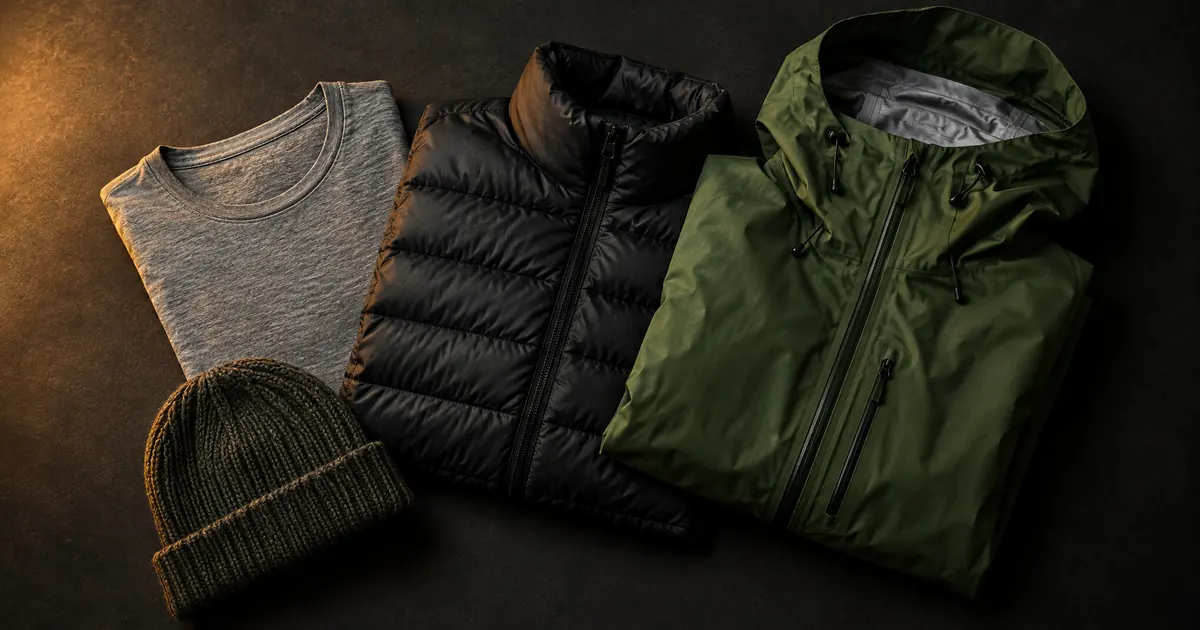
The three-layer system comes from mountaineering: a moisture-managing base, an insulating mid, and a weatherproof shell. It's genuinely the best framework for staying comfortable outdoors - but most people don't climb mountains. They commute, walk the dog, and stand on cold sidelines. Here's how the system translates to real life, and when you can ignore it entirely.
The 30-second version
Each layer has one job. The base moves sweat off your skin. The mid traps warm air. The shell blocks wind and water. Get all three right and you stay dry-warm in conditions that defeat any single jacket. Skip layers wisely and you can carry less.
Layer one: the base (your t-shirt counts)
For everyday wear, your base layer is usually whatever you're already wearing - a tee, a henley, a thermal if it's bitter. The only rule that matters: cotton is fine for short exposure, but if you'll be active (shoveling, hiking, chasing kids), synthetic or merino bases keep you warmer by staying dry.
Layer two: the mid (where Orvanee lives)
The midlayer is the insulation, and this is where most everyday wardrobes are thinnest. Your options, warmest to lightest:
- Puffers and quilted jackets: maximum warmth per gram. A packable puffer stuffs into its own pocket and disappears into a work bag until the temperature drops.
- Puffer vests: the commuter's secret weapon. They keep your core - the region that drives whole-body comfort - warm while freeing your arms entirely. Under a shell, a vest is a legitimate winter system.
- Fleece and sherpa: breathable warmth that doesn't care about drizzle. The lining in our sherpa-lined denim is doing midlayer duty permanently sewn into a shell.
- Heavy cotton (hoodies, sweatshirts): fine mids for dry, mild cold. Useless when wet, so pair them with a real shell in weather.
Layer three: the shell
The shell's job is to stop moving air and falling water. Two everyday categories:
- Windbreakers: ultralight nylon or polyester that kills wind chill - the reason your grandma told you to wear a hat applies to your whole torso. A hooded windbreaker weighs less than a water bottle and earns its keep from the first breeze.
- Rain shells: coated or seam-sealed for actual precipitation. This is the layer that makes the system work in the wet-cold combination that defeats insulation alone, because insulation soaked through insulates nothing.
Putting it together: three real-world systems
The commuter (20-40°F, walking to transit)
Thermal or tee + quilted jacket + nothing else. A good midlayer with a tight weave handles brief exposure; save the full system for genuinely raw days.
The sideline parent (30-45°F, standing still for an hour)
Base + hoodie + long quilted coat. Standing still is the hardest case for staying warm - maximum midlayer, and the longer body matters more than any other feature.
The variable-day walker (40-60°F, weather undecided)
Tee + packable rain jacket in the bag + a vest or light mid if the morning is cold. This is the system that earns "prepared" without carrying luggage.
When one jacket beats the system
Honestly? Most days. If your exposure is short - house to car, car to office - a single warm jacket is simpler and lighter than a system. That's the design brief behind most of our catalog: jackets that stand alone for real life, with enough room in the cut to become a system when the forecast turns serious. The olive bomber over a tee handles 45°F; the same bomber over a hoodie handles 32°F.
The two mistakes everyone makes
- Overdressing for movement: if you're warm in the first ten minutes of walking, you're wearing one layer too many. You should feel slightly cool at the door.
- Cotton as the wet-weather base: cotton holds water and chills you. In rain or sweat, swap to synthetic or wool.
Layering isn't a purchase - it's a skill you build with what you own. But if your closet is missing the piece that makes it work, it's usually the midlayer. Start there, and let the puffers and quilted styles do the heavy lifting.