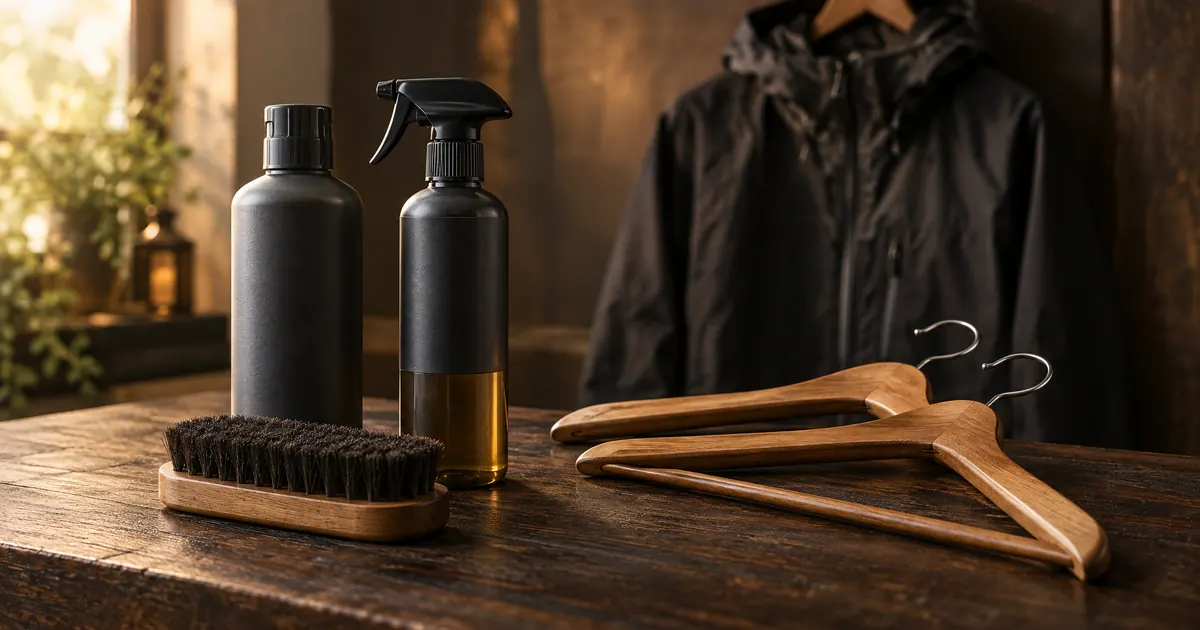
Jackets rarely die of old age. They die of dryers, wrong soap, crushed shoulders, and well-meaning fabric softener. The care that doubles a jacket's lifespan takes about ten minutes a season - you just need the right routine for each material. Here they all are, step by step.
First, the universal rules
- Read the tag before the first wash, not after the first disaster. Care labels are legally required to be accurate.
- Cold water, gentle cycle, mild detergent covers almost every fabric jacket that can be machine washed at all.
- Never machine dry unless the tag says so. Heat is the fastest killer of elastics, coatings, and faux leather.
- Fix it early: a loose thread becomes a seam repair; a small stain becomes permanent if set by a hot dryer.
Faux leather: wipe, don't wash
Faux leather (polyurethane) is the easiest material to maintain and the most sensitive to abuse. The routine:
- After wear: wipe with a barely damp cloth. That's the entire cleaning cycle for most wears.
- Deeper clean: a drop of mild dish soap in water, damp cloth, wipe, then wipe again with clean water. Never submerge, never machine wash, never dry clean - solvents destroy the PU face.
- Stains: treat immediately. Ink and dye transfer (especially from dark denim) are the two that matter; a paste of baking soda and water lifts most surface marks.
- Storage: hang on a broad hanger, in a closet that never hits direct heat. Crushed folds become permanent creases in PU.
- Conditioning: unlike real leather, PU needs no conditioning - but a dedicated plastic-safe protectant spray twice a year keeps the surface supple.
Follow that and a quality faux leather jacket looks essentially new for years. Break the rules (heat, solvents, machine) and no revival method will save it - prevention is the whole game.
Denim: wash rarely, cold, inside out
Denim's enemy is friction in the wash, which is why the classic advice is to wash as rarely as possible:
- Spot clean between washes; air out overnight instead of washing after light wear.
- When it's time: cold water, inside out, gentle cycle, mild detergent, hang dry. Never the dryer - heat and tumbling are what shrink and dull denim.
- Sherpa-lined denim follows the same rules plus patience: the fleece takes a day to air dry. Never wring it.
- Fades are earned: if you love the worn look, wear is your tool. If you want the color to stay dark, the inside-out cold wash is non-negotiable.
A denim jacket cared for this way outlasts most things in your closet - and the raw-hem, natural-fade versions that age with you are half the appeal.
Puffers and quilted: wash low, dry low, restore loft
Insulated jackets fail in one of two ways: the shell leaks or the fill clumps. Both are preventable:
- Pre-wash: zip everything, empty pockets, turn inside out. Treat stains (collars and cuffs) with a dab of detergent before the cycle.
- Wash: cold, gentle, technical detergent or mild liquid - never powder (it doesn't dissolve in cold) and never fabric softener, which coats and kills loft.
- Dry - the critical step: tumble on low with two or three clean tennis balls or dryer balls. The balls break up fill clumps as they form. Expect 2-3 cycles; patience here is what restores that showroom loft.
- Between wears: hang it. A puffer left stuffed in a bag all season will loft less by spring - compression is for travel, not storage.
If a washed puffer still won't re-loft in the clumps, the fill has broken; that's the natural end of a synthetic fill's life, typically years in. Our puffers and quilted styles use fills chosen to survive repeated washing cycles.
Technical shells (windbreakers and rain jackets): protect the coating
Water resistance lives in a coating or membrane, and the care routine exists to protect it:
- Rinse after dirty use: mud, sunscreen, and insect spray all degrade coatings. A rinse in the shower after trips handles it.
- Machine wash: cold, gentle, technical cleaner (or tiny amounts of mild liquid detergent). Zip zips, close flaps. No softener, ever - it's the direct killer of water repellency.
- Dry: hang dry, or tumble low for ten minutes if the tag allows, which helps re-activate the DWR finish.
- Reproof when water stops beading: wash-in or spray-on DWR treatments cost $10-15 and restore factory-level beading in an afternoon. This single step is the difference between a rain jacket that lasts three seasons and one that lasts ten.
Storage: the season-end ritual
- Clean everything before storage. Body oils and stains set permanently over a summer and feed moths in wool.
- Broad hangers for everything structured; fold only what the manufacturer folds (packables in their pockets).
- Breathable space, not vacuum bags - vacuum compression degrades fills and coatings over months.
- Dry, dark, uncrowded: heat sources and direct sun are slowly destructive; a packed closet creases shoulders.
The revival kit worth owning
- DWR spray - revives rain shells.
- Down/synthetic wash - keeps insulation lofting.
- Fabric glue or iron-on patches - small shell punctures, fixed in minutes.
- A proper lint shaver - resurrects pillied fleece linings and quilted faces.
Ten minutes of seasonal care is the cheapest outerwear upgrade there is - it's how a $60 jacket performs like a $200 one for years. And when you do retire a piece, recycle it: most textile programs take worn synthetic jackets. Until then, take care of the ones you love - or start fresh with something built to be maintained, from the full Orvanee collection.